
Why Spring is the Best Time to Recoat Your Garage
As the weather warms up and we dive into spring cleaning, the garage often becomes the catch-all for clutter. But once you clear out the winter gear and sweep away the road salt, you're left with a floor that likely looks dull, cracked, and worn.
If you’ve been putting off a floor upgrade because of the cost or the complexity, now is the perfect time to reclaim your space. Here is why a DIY epoxy project should be at the top of your spring to-do list.
Optimal Conditions for a Perfect Bond
Epoxy and polyaspartic coatings are chemistry in action. For the best results, you want moderate temperatures and lower humidity, the "Goldilocks" zone of spring.
- Faster Cure Times: Unlike the humid heat of summer or the freezing chill of winter, spring air allows the primer and base coat to cure at a predictable rate.
- Better Airflow: You can keep the garage door open to enjoy the fresh air and ensure proper ventilation without letting in a swarm of mid-summer bugs or a blast of winter air.
Skip the Rental Counter
Most homeowners dread the "prep" phase because it usually involves a trip to the rental yard for a heavy concrete grinder. It's expensive, difficult to transport, and leaves your house covered in fine white dust.
With our SkipGrind Primer, you can bypass that headache entirely. By using a chemical bond rather than mechanical profiling, you can go from a dirty concrete slab to a primed surface in a fraction of the time. This means more time enjoying your weekend and less time wrestling with industrial machinery.
A Transformation That Adds Value
A finished garage floor isn't just about aesthetics; it’s an investment.
- Eliminate Concrete Dust: Raw concrete constantly "sheds" fine dust that tracks into your house and settles on your cars. A sealed epoxy floor stops this at the source.
- Chemical Resistance: Spring showers bring mud, and DIY car maintenance brings oil spills. A WiseBond floor is non-porous, meaning fluids sit on top for easy cleanup rather than soaking into the slab.
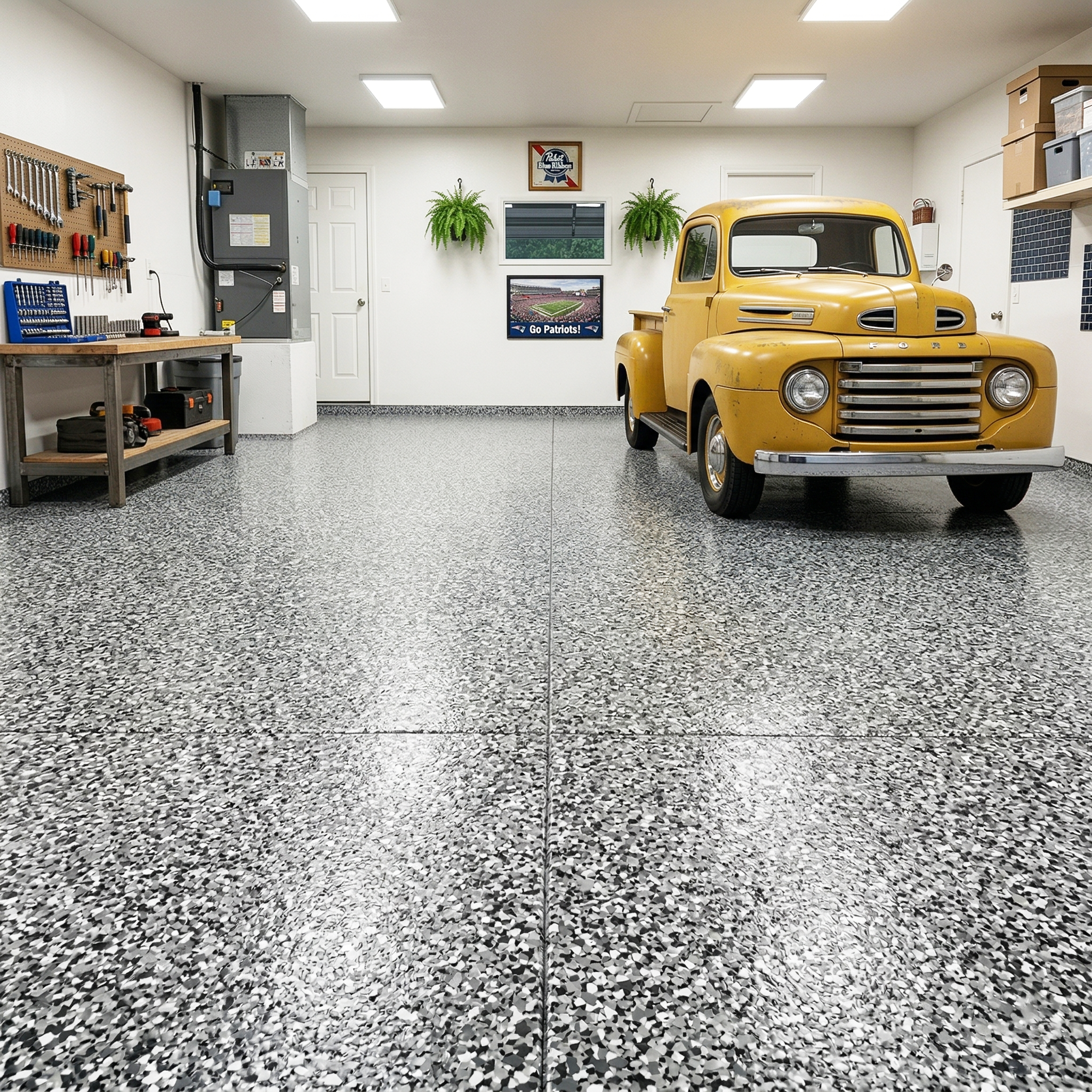
- Enhanced Lighting: The high-gloss finish of a flake system reflects light, making a dark, dingy garage feel like a professional showroom.
Start Your Project Today
Don't let another year go by with a floor that brings down the look of your home. Whether you're creating a home gym, a dedicated workshop, or just want a clean place to park the family car, we have the kit to get you there.
Browse our DIY Epoxy Kits and find the flake blend that matches your style. From the sleek look of Carbon to the warm tones of Shoreline, your professional-grade floor is just a weekend away.
Do you have a specific square footage or a unique floor condition (like existing paint or deep cracks) that you're worried about?
FAQ
Why is spring considered the best season for applying an epoxy garage floor coating? Spring provides the ideal balance of moderate temperatures and manageable humidity levels, which are critical for the chemical curing process of epoxy. During spring, temperatures typically fall within the optimal range of 60°F to 85°F, ensuring the epoxy flows smoothly and bonds correctly to the concrete without drying too quickly or failing to harden.
How does winter road salt damage garage floors and why should it be addressed in the spring? Winter road salt and de-icing chemicals are highly corrosive; they seep into the pores of bare concrete, leading to pitting, cracking, and structural degradation over time. Addressing this in the spring allows homeowners to wash away these harmful residues and seal the floor with epoxy, preventing further moisture penetration and salt-related damage during the following year.
What role does humidity play in the success of a DIY garage floor recoating project? Humidity levels significantly impact the evaporation rate and chemical reaction of epoxy resins. High humidity can cause moisture to become trapped within the coating, leading to a cloudy finish or improper adhesion, while spring’s typically moderate humidity allows for a predictable drying time and a clear, high-gloss professional finish.
How does proper ventilation during the spring help with the epoxy installation process? Spring weather allows for keeping garage doors and windows open to provide maximum airflow without exposing the wet epoxy to the extreme heat of summer or the freezing drafts of winter. Proper ventilation is essential for safety to disperse chemical vapors and assists in the consistent curing of the epoxy layers.
Why is spring cleaning the most efficient time to plan a garage floor transformation? Spring cleaning naturally requires homeowners to empty the garage of clutter, winter equipment, and vehicles, which is the most labor-intensive part of the epoxy process. Since the floor is already cleared for organization, it creates a seamless opportunity to perform the necessary cleaning, etching, and coating without having to move heavy items twice.
Pricing & Value
Is it more affordable to coat a garage floor in the spring compared to other seasons? While material costs remain stable, spring DIY applications prevent expensive concrete repairs. Sealing your floor in spring stops winter salt damage from worsening, saving you thousands in potential long-term concrete restoration or replacement costs.
How does a DIY epoxy floor kit compare in value to professional installation? A high-quality DIY epoxy kit provides professional-grade durability at a fraction of the cost. Homeowners can typically save 60-70% on total project expenses by providing their own labor while achieving the same high-end, protective results.
Does recoating a garage floor provide a high return on investment (ROI)? Yes. An epoxy floor coating is one of the most cost-effective home improvements. It increases the usable square footage of your home and enhances resale value by creating a clean, finished look that appeals to prospective buyers.
Key Takeaways
- Optimal Curing Conditions: Spring offers the "Goldilocks" temperature range (60°F–85°F) necessary for epoxy to bond and cure with professional-grade consistency.
- Neutralize Winter Damage: Recoating in spring allows you to remove corrosive road salts and de-icing chemicals before they cause permanent structural pitting in your concrete.
- Maximized Efficiency: Integrating a floor project with your annual spring-cleaning saves time and labor, as the garage must already be cleared for the season.
- Moisture Protection: Sealing the floor in the spring creates a waterproof barrier that protects your garage substrate from the heavy rains and high humidity of the coming summer months.
- Enhanced Durability: Using a high-solids epoxy during the ideal spring window ensures a thicker, more resilient finish that resists hot-tire pickup and chemical spills for years to come.